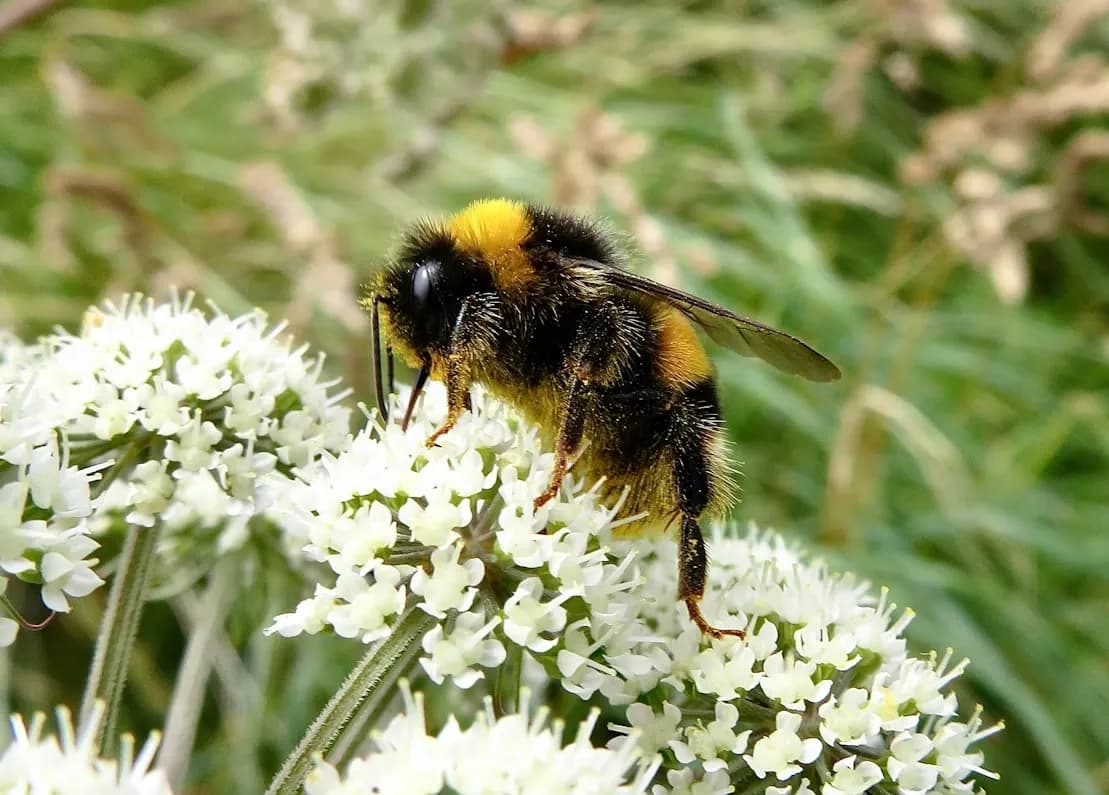
Bumblebees may look peaceful as they jump from flower to flower, but their emotional lives are far more complex. Biologists from Guangzhou discovered that the mood of one bee can be transmitted to others and influence the behavior of the entire colony. The study was conducted on buff-tailed bumblebees and published in Science.
To measure emotional states, the researchers used a method similar to a judgment bias test. Bees were trained to recognize two colors: one signaled the presence of sugar, the other its absence. Then ambiguous shades were introduced. Optimistic bees approached these uncertain colors more quickly, as if expecting good news.
The key experiment showed that optimism can spread through behavior. One bee received a drop of sucrose and then had a 30-second interaction with another “observer” bee. That short visual contact was enough for the observer to react to ambiguous colors just as confidently as the rewarded bee.
Importantly, the effect disappeared in complete darkness, even when the insects touched. This means the transmission relied on visual cues — movement and behavior — rather than smell or touch. The researchers suggest a dopamine-like mechanism may be involved, as this chemical is associated with positive emotional states in insects.
The study reveals that social influence exists even in tiny animals. Both positive and potentially negative emotions can spread through a colony, shaping its overall mood. For beekeeping, maintaining a calm environment could be just as crucial as nutrition and health.